
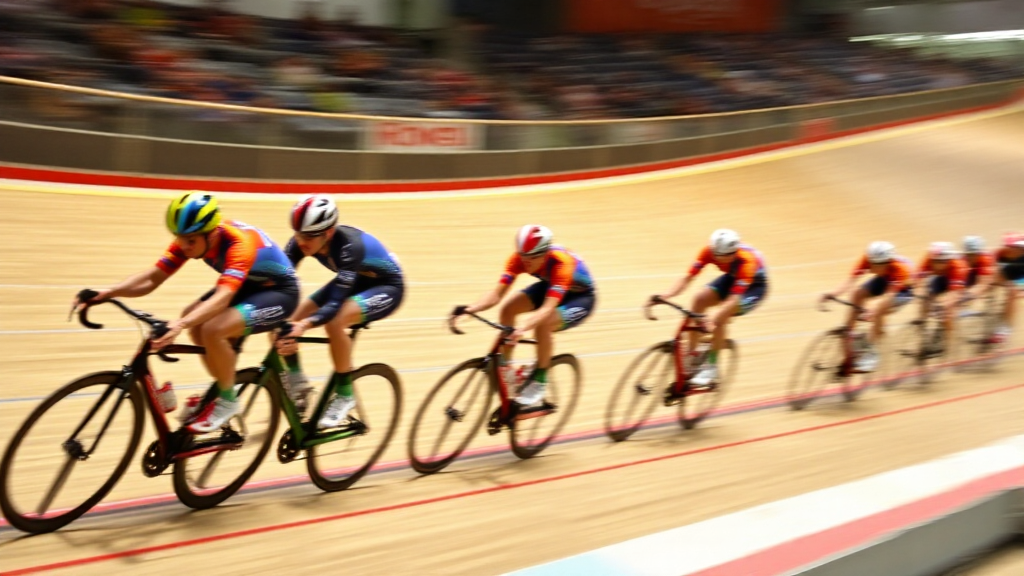
Kenya took a landmark step in the development of track cycling on Wednesday when Cabinet Secretary for Sports Salim Mvurya officially opened the country’s first Olympic-standard velodrome in Eldoret, a facility built at a cost of Sh620 million and designed to transform a discipline in which Kenya has historically been absent from the global stage.
The 250-metre Eldoret Velodrome, constructed on a five-acre plot adjacent to Eldoret Sports Club, was built under a partnership between Uasin Gishu County, Sports Kenya and the Union Cycliste Internationale (UCI), which contributed technical support and approximately Sh85 million in grant funding through its African development programme.
A Facility Built for the Future
The velodrome features a steeply banked Siberian pine track, seating for 3,500 spectators, a rehabilitation and sports science centre, dedicated change rooms for male and female athletes, and a full timing and broadcast system compatible with UCI sanctioned events. An adjacent road cycling circuit of 1.8 kilometres has also been laid out on the surrounding grounds, providing a training loop for junior riders.
“Eldoret is the home of champions on the road and the cross-country trail,” CS Mvurya said at the opening ceremony, attended by Uasin Gishu Governor Jonathan Bii and UCI Africa regional director Yolande Speelman. “Today we add another dimension. Track cycling demands explosive power, tactical intelligence and raw courage — qualities that Kenyan athletes have in abundance. We expect to be competitive in this discipline within four years.”
Governor Bii, whose county contributed Sh310 million towards the project from the county sports development fund, said the velodrome was part of a broader plan to make Eldoret a year-round destination for sports tourism. The town already hosts the Eldoret City Marathon and serves as a training base for dozens of elite long-distance runners.
Nurturing Local Talent
The Kenya Cycling Federation (KCF) has already enrolled 60 junior riders aged between 14 and 18 in an initial track cycling programme that begins next month. The riders, selected from schools across Uasin Gishu, Nandi and Elgeyo-Marakwet counties, will train under two UCI-certified coaches hired from South Africa and Rwanda — countries that have established stronger track cycling programmes on the continent.
KCF President Dismas Indire said the federation’s target was to have at least three Kenyan athletes competing in UCI World Track Cycling Championships by 2027. “We are not starting from scratch in terms of athleticism. Many of these youngsters are former cross-country runners and mountain bikers. Translating that fitness to the velodrome is achievable,” Indire told journalists after the ribbon-cutting.
Kenya’s most prominent road cyclist, Suleiman Kangangi, who has raced for UCI WorldTeam Qhubeka in Europe, attended the opening and pledged to support talent identification clinics at the new facility during the off-season. “When I started, there was nothing like this in Kenya. These young riders are inheriting something I never had,” he said.
Economic and Diplomatic Dimensions
The velodrome project carries significance beyond sport. It was partly financed through a soft infrastructure loan negotiated under Kenya’s EAC integration framework, with Rwanda — which opened its own velodrome in Kigali in 2023 — sharing design specifications and contractor knowledge at no cost. Officials from the two countries signed a bilateral cycling exchange agreement in March that will see junior riders train across borders.
Sports Kenya Director General Pius Metto said the Eldoret facility was the first of three planned velodromes nationally, with Nairobi and Mombasa earmarked as future sites pending budget confirmation in the 2026/2027 supplementary estimates. “The IMF programme has required fiscal discipline, but investment in sports infrastructure is investment in human capital, and we are making the case for its prioritisation,” Metto said.
The velodrome is expected to host its first sanctioned UCI event — a continental development race — in February 2027, with organisers already in discussions with cycling federations from Ethiopia, Uganda, Tanzania and South Africa about participation.

0 comments