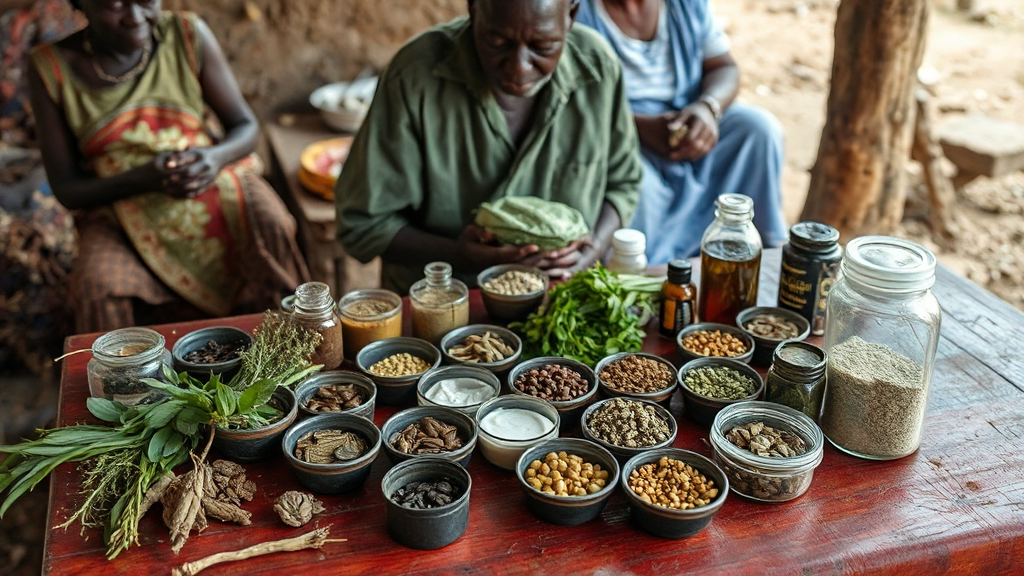
On a Tuesday morning in Murang’a County, herbalist and healer Mama Wanjiku Njoroge receives her fourteenth patient before 10 a.m. She has no appointment system, no electronic record, and no formal medical qualification recognised by the Kenya Medical Practitioners and Dentists Council. She also has no shortage of patients. Drawn by decades of community trust, by the barrier-free access she provides — consultations cost whatever the patient can afford — and by geography that places her hut within walking distance of villages that are two hours from the nearest government dispensary, Mama Wanjiku is, for many of her neighbours, the first and sometimes only healthcare they will encounter.
Multiply her practice across Kenya’s 47 counties and you begin to understand the scale of the question now being formally pressed upon the Ministry of Health and the Social Health Authority: what role, if any, should the country’s estimated 40,000 traditional medicine practitioners play in the formalised national health architecture? A coalition of traditional healer associations, led by the Kenya Traditional Healers and Herbalists Association (KTHHA), has submitted a formal petition to Parliament’s Health Committee and the SHA Board calling for a statutory regulatory framework and a pathway to SHA accreditation for traditional medicine services.
The Scale of Traditional Medicine Use
The Ministry of Health’s own surveys consistently show that between 60 and 80 per cent of Kenyans use traditional medicine at some point during their healthcare journey, most commonly as a first resort before escalating to a biomedical facility or as a complement to conventional treatment. In rural and peri-urban areas, particularly in communities with strong cultural practices around healing — including significant portions of the Luo, Luhya, Kamba, Giriama, and Maasai communities — traditional practitioners serve as the de facto primary care system, managing conditions ranging from musculoskeletal pain and gastrointestinal illness to mental health crises and chronic disease.
KTHHA Chairman Mr. Kariuki Mwangi argues that ignoring this reality is not neutral — it is actively harmful. “The SHA was designed to achieve universal health coverage. If 70 per cent of Kenyans begin their health journey with us, and we are invisible to the SHA, then you do not have universal coverage. You have coverage for those who use the formal system first,” he told ZaKenya. “We are not asking to practise surgery. We are asking to be seen, to be accountable, and to be able to refer patients formally to the hospital system when they need it.”
The Regulatory Question
Kenya has no comprehensive legislation governing traditional medicine practice. The Traditional Health Practitioners Act has been in draft form since 2018, stalled in successive parliamentary sessions by a combination of medical lobby resistance, definitional disputes over what constitutes a traditional practice, and concerns about creating a parallel healthcare system that might divert patients from evidence-based treatment. The World Health Organisation’s Traditional Medicine Strategy 2019-2030 explicitly endorses the integration of quality-assured traditional medicine into national health systems, and a number of African countries — including South Africa, Ghana, Uganda, and Tanzania — have enacted statutory frameworks for registration and oversight of traditional practitioners.
Kenya’s medical establishment has been cautious, and in some quarters actively hostile. The Kenya Medical Association has supported a registration and education framework as a consumer protection measure — to protect patients from dangerous and fraudulent practitioners — while firmly opposing SHA reimbursement for traditional therapies lacking clinical evidence. Dr. Samuel Mwenda, KMA Chairman, drew a clear distinction: “We support knowing who is practising. We cannot support paying for treatments that have not been tested for safety and efficacy. That is not discrimination against culture — that is basic ethical medicine.”
A Path Toward Integration
The KTHHA proposal attempts to navigate this tension by proposing a phased framework. In phase one, all practitioners would register with a proposed Traditional Medicine Council, providing verifiable identity, a description of their practice, and community character references. Phase two would involve a skills assessment and basic training in patient safety, hygiene, record-keeping, and referral protocols. Phase three, for practitioners meeting quality benchmarks, would allow SHA accreditation for a defined basket of non-invasive services — herbal consultations, dietary counselling, and traditional physiotherapy — with mandatory referral protocols for conditions requiring biomedical intervention.
The Ruto administration’s Universal Health Coverage agenda, anchored in the SHA rollout, has created political space for this conversation that did not exist under previous administrations. With the 2027 elections approaching and the government seeking to demonstrate that SHA serves all Kenyans rather than the urban formal-sector majority, the political calculus of welcoming traditional practitioners into the health tent has shifted. A joint technical working group between the Ministry of Health, the SHA, and the KTHHA began meeting in May, with a report expected before parliament’s September session. For Mama Wanjiku and the millions of Kenyans who depend on practitioners like her, the outcome matters profoundly.

0 comments