
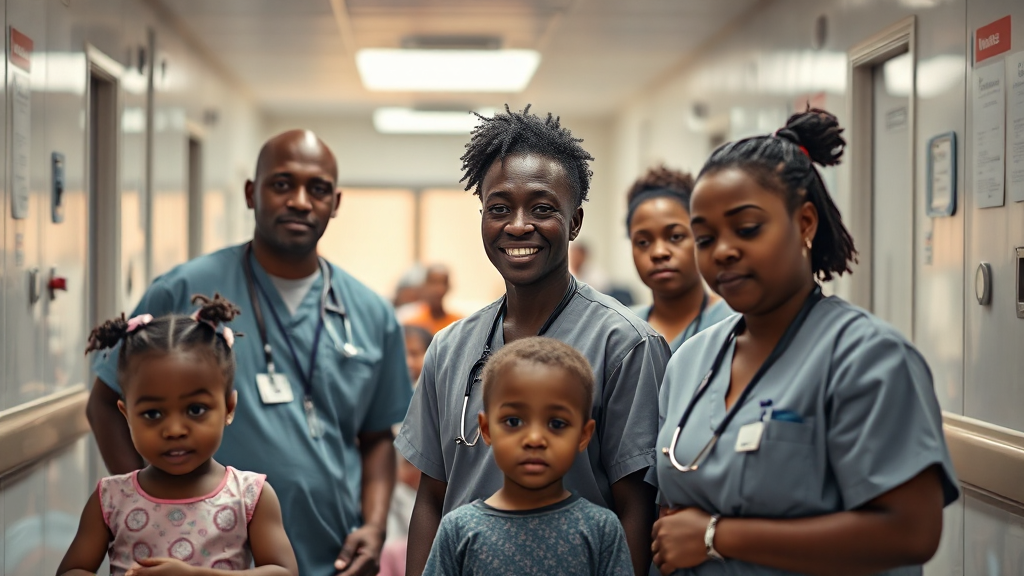
Gertrude’s Children’s Hospital, East Africa’s largest dedicated paediatric facility, officially opened its Kisumu branch on 23 June 2026 in a ceremony attended by Health Cabinet Secretary Dr. Aden Duale and Kisumu Governor Prof. Anyang’ Nyong’o. The Ksh 1.4 billion facility, located along Oginga Odinga Street in the city centre, marks the first major private paediatric hospital to establish a full-service presence in western Kenya, a region of approximately 15 million people that has historically been compelled to refer complex child health cases to Nairobi.
The 80-bed hospital is equipped with a 12-bed neonatal intensive care unit, a paediatric high-dependency unit, operating theatres for neonatal and paediatric surgery, a dedicated oncology day-care ward, and outpatient specialist clinics covering cardiology, neurology, nephrology, orthopaedics, and developmental paediatrics. It is SHA-accredited, meaning families enrolled in the Social Health Authority can access inpatient and outpatient paediatric services under the national benefit schedule — a provision that Gertrude’s CEO Adil Bhimji described as central to the facility’s mission.
Filling a Critical Gap
The Kisumu opening addresses a longstanding inequity in Kenya’s health geography. For complex paediatric cases — congenital heart defects, childhood cancers, severe neonatal complications — families in Kisumu, Homa Bay, Migori, Siaya, Kisii, and the surrounding counties have had three unappealing options: navigate the overstretched public system at Jaramogi Oginga Odinga Teaching and Referral Hospital, undertake an expensive and exhausting journey to Nairobi, or forgo specialist care entirely. An estimated 35 per cent of paediatric referrals from western Kenya to Nairobi-based facilities are recorded as either not attending or presenting after significant delay, with clinical deterioration a frequent consequence.
Dr. Catherine Ombok, the branch’s Medical Director, previously led the neonatal unit at Jaramogi and spent nine years documenting the referral crisis from the public sector side. “We were losing children to distances, not to lack of medical knowledge,” she told ZaKenya. “A premature baby needing a ventilator cannot survive a five-hour road journey to Nairobi. We now have ventilators here. That changes everything for the families of western Kenya.”
The facility will also function as a training hub. A memorandum of understanding signed with Maseno University School of Medicine and the University of Nairobi’s Department of Paediatrics provides for postgraduate clinical rotations, with the long-term goal of growing a specialist paediatric workforce rooted in the region rather than trained in Nairobi and then retained there. Brain drain within Kenya — from rural counties to the capital and from the capital to the Gulf and UK — is as significant a constraint on specialist access as brain drain to foreign countries.
SHA Integration and Accessibility
SHA accreditation means the Kisumu branch can process claims digitally through the SHA portal for covered services including consultations, investigations, inpatient care, and neonatal intensive care stays up to prescribed limits. However, health financing experts caution that the SHA paediatric benefit ceiling — capped at Ksh 150,000 for a single inpatient episode — may prove inadequate for high-cost neonatal ICU stays, which routinely exceed Ksh 400,000 for very premature infants. Gertrude’s has indicated it will operate a charitable care fund to bridge gaps for families who exhaust SHA limits, seeded with Ksh 50 million in the inaugural year from its foundation arm.
The opening has been welcomed by child health organisations across the region. Save the Children Kenya’s Country Director noted that western Kenya accounts for a disproportionate share of Kenya’s under-five mortality, driven by high rates of malaria, severe acute malnutrition, and neonatal complications. Governor Nyong’o, a longstanding advocate for equitable health investment, described the facility as the most significant addition to Kisumu’s health infrastructure since the expansion of Jaramogi Referral Hospital a decade ago. “Our children deserve the same standard of care as children in Nairobi’s Karen or Westlands,” he said. “Today we move closer to that standard.”
What Comes Next
Gertrude’s management has indicated that a second western Kenya satellite clinic in Kakamega is under feasibility assessment, contingent on the performance of the Kisumu flagship in its first 18 months. If demand projections hold — and with a catchment population of 15 million and rising SHA enrolment, they are likely to — western Kenya may finally be developing the private paediatric infrastructure its children have long needed and deserved.

0 comments