Kenyan Fashion Designer's Collection Debuts at Paris Fashion Week
Arts & Entertainment

Kenyan Fashion Designer’s Collection Debuts at Paris Fashion Week

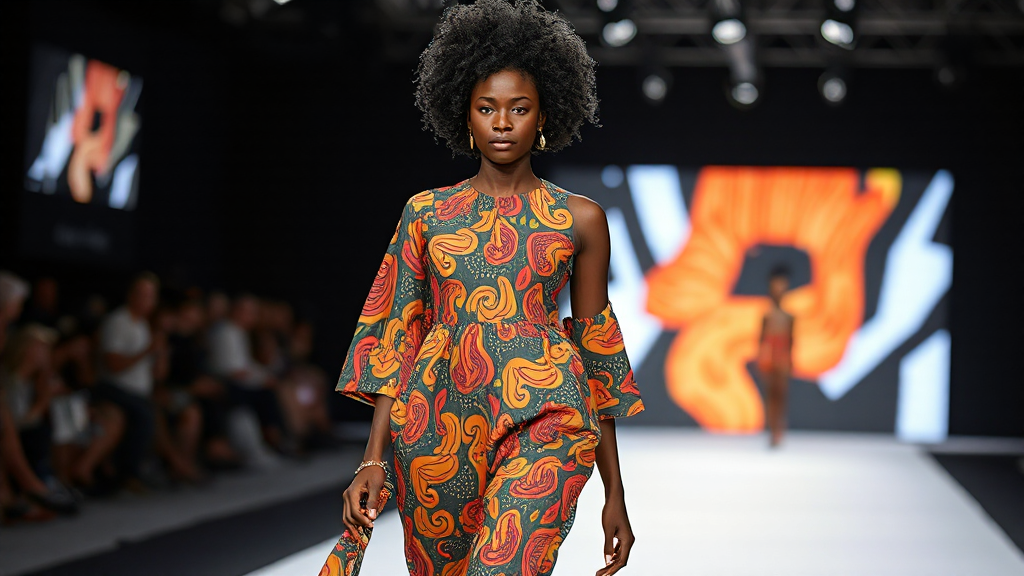
The invitation, when it arrived, read simply: “Amara Ochieng. Prêt-à-Porter. Palais de Tokyo. 26 Juin 2026.” For the 29-year-old Kisumu-born, Nairobi-based designer, it was the culmination of a decade of work that began in a single room in her mother’s house in Kondele, where she first learned to manipulate cotton and sisal with the deliberate patience she now calls her aesthetic signature. Last month, she became the first Kenyan designer in history to present a collection at Paris Fashion Week ready-to-wear.

The 24-piece collection, titled “Nyar Nam” — Daughter of the Lake in Dholuo — was a love letter and a provocation. Drawing on the weaving traditions of the Luo fishing communities of the Lake Victoria basin, Ochieng constructed silhouettes from hand-loomed raffia, sustainably sourced cotton twill produced at a co-operative in Siaya County, and hand-dyed silk organza whose colours — deep ochre, lake-water green, and the particular blue-black of a Kisumu evening — stopped several buyers in the front row mid-conversation.

The Collection

Fashion critics who attended the show at the Palais de Tokyo were largely effusive. Vogue Paris described the collection as “a rigorous and deeply felt argument that African luxury requires no Western translation,” while Business of Fashion awarded the show four stars, praising the structural integrity of Ochieng’s tailoring and what its reviewer called “a colourist’s confidence that most European designers would take decades to develop.”

The collection was not without complexity. Several pieces incorporated geometric patterns referencing the woven fish traps — ngogo — used by Luo fishermen on Lake Victoria, a motif that Ochieng has spent three years developing into a credible structural vocabulary rather than mere surface decoration. A floor-length evening coat in natural raffia with inset panels of hand-embroidered silk drew the loudest response from an audience that included several editors and buyers from major European luxury houses.

Three pieces from the collection were immediately acquired by the Palais Galliera, Paris’s museum of fashion, for its permanent collection — the first works by a Kenyan designer to enter a major European fashion museum.

The Road From Nairobi

Ochieng graduated from the Kenya Institute of Mass Communication’s design programme in 2017 before securing a scholarship to Central Saint Martins in London, where she completed a master’s degree in fashion design. She returned to Nairobi in 2020, against the advice of several of her European mentors, and established her atelier in a refurbished space in Hurlingham. “People told me I was committing professional suicide by coming back,” she said in an interview with ZaKenya.com before departing for Paris. “But I knew that the material I was working with — culturally, literally in terms of fibre and dye — existed here and not there.”

Her business has grown steadily. She employs eleven full-time artisans, eight of them women from weaving communities in western Kenya who travel to Nairobi for production weeks. Her pieces retail from Ksh 85,000 to Ksh 650,000, and she has an established clientele among Nairobi’s professional class and a growing order book from private clients in London, Dubai, and New York.

What Comes Next

The Paris debut has accelerated several conversations. Ochieng confirmed to ZaKenya.com that she is in “advanced discussions” with a major French luxury group about a strategic partnership that would give her access to European distribution without relinquishing creative control, a distinction she describes as non-negotiable. Cabinet Secretary Mvurya congratulated Ochieng on behalf of the government and confirmed that her work would be used as a case study in the forthcoming Creative Economy Bill’s policy schedules. “Amara Ochieng is proof that Kenya’s creative exports can compete at the highest level,” he said in a statement. “Our job is to build the ecosystem that produces more of her.”


Read More
Kenya National Theatre Launches New Season with Sold-Out Swahili Play
Arts & Entertainment

Kenya National Theatre Launches New Season with Sold-Out Swahili Play

When the curtain rose at the Kenya National Theatre on Harry Thuku Road last Thursday, the audience of 440 people — every seat sold, standees lining the rear walls — fell into a silence that the building’s cracked plaster and peeling paint seemed to make even more profound. What followed over the next two hours and twenty minutes was, by the reckoning of several critics in attendance, the most significant piece of Kenyan theatre in a generation.

“Mtaa wa Moto” (Neighbourhood of Fire), written by Mombasa-born playwright Fatuma Ali Rashid and directed by veteran stage director Opiyo Mumma, is an unflinching dramatisation of a working-class Nairobi family navigating the aftermath of the 2024 Finance Bill protests. Performed entirely in Kiswahili, with snatches of Sheng and Giriama, the play traces three siblings — a street vendor, a university student, and a low-ranking government clerk — as they reckon with grief, aspiration, and betrayal in equal measure. Its opening weekend sold out within three hours of tickets going on sale through an M-Pesa-integrated booking system in late June.

A Theatre Reborn

The production marks the centrepiece of the Kenya National Theatre’s 2026 season, its most ambitious programming slate since the early 2000s. The season, unveiled by KNT Artistic Director James Fundi Ndegwa at a press conference in May, comprises eleven productions running through December, including two world premieres, a revival of Ngugi wa Thiong’o’s “I Will Marry When I Want,” and a joint production with the Alliance Francaise de Nairobi.

“For too long we operated as a venue for hire rather than as a producing house,” Ndegwa told journalists. “This season is our declaration that the Kenya National Theatre is back as an originator of work, not merely a building that others fill.” The turnaround has been aided by a Ksh 180 million government grant announced in the 2026-2027 national budget, the largest single allocation to the theatre since independence, alongside a Ksh 40 million private sector sponsorship from Equity Bank’s Foundation and a contribution from Safaricom’s Telkom Arts Fund.

Part of the investment has gone into long-overdue physical improvements. New stage lighting rigs imported from Germany were installed in March, and the main auditorium’s sound system has been entirely replaced. A second, more intimate 120-seat studio space — the Ngugi Studio — was inaugurated in April and will host experimental and youth-focused programming throughout the season.

Swahili at the Centre

The decision to anchor the season’s flagship production in Kiswahili is itself a statement. Kenya’s theatrical tradition has long been bifurcated between English-language productions catering to a relatively narrow educated elite and vernacular community theatre that struggled for institutional support. “Mtaa wa Moto” deliberately refuses that division. It was developed through a six-month community workshop process involving residents from Mathare, Kibera, and Eastleigh, whose testimonies about the 2024 protests fed directly into Rashid’s script.

“I wanted to write a play that a mama mboga from Gikomba could watch and feel that her story had been told with dignity,” Rashid said backstage after last Thursday’s opening performance. “Theatre in Kenya has too often been a luxury good. This play is for everyone.”

The critical response has been effusive. Daily Nation theatre critic Charles Otieno awarded the production five stars, writing that “Fatuma Ali Rashid has written the definitive Kenyan play of the post-protest era,” while The Standard’s arts correspondent described it as “a work of moral seriousness that our theatre has been crying out for.”

Looking Ahead

KNT management has already announced an extension of “Mtaa wa Moto” through to the end of August following its sold-out opening run, and is in discussions with the British Council about a UK touring production in early 2027. For a building that many had written off as a relic, the sell-out season feels like a resurrection. “Kenya has always had great stories,” said Ndegwa. “Now we finally have the resources to tell them properly.”

Read More
Lupita Nyong'o Returns to Kenya, Inspires Young Filmmakers at Nairobi Workshop
Arts & Entertainment

Lupita Nyong’o Returns to Kenya, Inspires Young Filmmakers at Nairobi Workshop

She arrived without the fanfare one might expect of an Oscar winner, slipping into the Nairobi Film School’s converted warehouse space in the Industrial Area on a Tuesday morning, carrying a cardboard cup of chai from a roadside kiosk. For Lupita Nyong’o, Kenya’s most globally celebrated actress, the low-key entrance was entirely deliberate. “I am not here as a celebrity,” she told the 35 selected participants gathered in the room. “I am here as someone who learned to tell stories, and who wants to understand what stories you need to tell.”

The five-day intensive workshop, which ran from 30 June to 4 July, was convened by the Kenya Film Commission in partnership with Nyong’o’s New York-based production company, Mvua Films. Participants — selected from more than 1,200 applicants through a competitive process — included directors, screenwriters, cinematographers, and producers aged between 19 and 31, drawn from across the country including from Kisumu, Mombasa, Garissa, and Nakuru.

Craft, Commerce, and Courage

The curriculum was structured around three pillars that Nyong’o described as the non-negotiables of a sustainable filmmaking career: craft, commerce, and courage. Morning sessions focused on practical storytelling — script analysis, casting instinct, working with non-professional actors — while afternoons were given over to the business of film: co-production agreements, festival strategy, international distribution, and the increasingly vital world of streaming platform commissioning.

Netflix Africa’s head of original content, who joined via video call on day three, confirmed that the platform has a standing brief to commission at least eight Kenyan original productions per year through 2028 but has struggled to find projects with production-ready documentation. “The talent is absolutely here,” she told participants. “What we need are completed financing plans, chain of title documentation, and estimated delivery schedules. These are learnable skills, and that gap is closeable.”

Nyong’o herself led sessions on courage — the willingness to make films about subjects that are locally specific, culturally honest, and commercially uncertain. She was candid about her own career choices. “When I did ‘Us’ with Jordan Peele, people told me horror was not for me. When I pushed to make certain projects with African settings, I was told there was no market. I made those choices anyway,” she said. “Your instincts about your own stories are your most valuable asset. Do not let anyone price them out of you.”

Structural Gaps and Government Commitments

The workshop also served as a forum for frank conversations about the structural challenges facing Kenyan cinema. Participants raised the cost and availability of professional-grade equipment, the absence of a functioning film tax rebate scheme, weak intellectual property enforcement, and the lack of a domestic theatrical distribution network capable of supporting locally produced feature films.

Kenya Film Commission CEO Timothy Owase, who attended two days of the workshop, acknowledged the gaps and referenced commitments made in President Ruto’s 2026 State of the Nation address to establish a Kenya Film Fund with an initial capitalisation of Ksh 500 million. “We are targeting legislation by the end of this financial year,” Owase said. “We recognise that we have been promising infrastructure for too long. The time for delivery is now.”

Nyong’o announced at the close of the workshop that Mvua Films would partner with the Kenya Film Commission to provide five fully funded post-production attachments per year, placing Kenyan editors, sound designers, and colourists in professional facilities in Nairobi and Johannesburg for six-month placements. She also committed to executive producing one feature film by a Kenyan director within the next 24 months. “I left Kenya to find a film education,” she said in her closing remarks. “I want the next generation to be able to get that education without leaving.” The room gave her a standing ovation that lasted, by several accounts, a full two minutes.

Read More
Afrobeats Takes Over Nairobi: How Kenya Became the Genre's New East African Home
Arts & Entertainment

Afrobeats Takes Over Nairobi: How Kenya Became the Genre’s New East African Home

On a humid Friday evening at the newly refurbished Carnivore Grounds in Langata, some 8,000 fans pressed against the barriers as Nairobi-born producer and vocalist Bien commanded the main stage alongside three Nigerian headline acts. The scene — electric, sweaty, and unmistakably Kenyan — would have been unthinkable five years ago, when Afrobeats enthusiasts had to travel to Lagos or Accra to experience the genre at full throttle. Today, the genre has come to them.

Nairobi in mid-2026 has emerged as the undisputed capital of Afrobeats in East Africa, and industry insiders say the transformation is structural, not accidental. A confluence of forces — Gen Z’s assertive cultural identity following the 2024 protests, Safaricom’s ongoing 5G rollout enabling seamless high-quality streaming, and a generation of formally trained studio producers — has reshaped the city’s musical landscape in ways that are drawing global attention and real money.

A New Creative Infrastructure

The numbers tell the story plainly. According to the Kenya Copyright Board’s mid-year report released in June 2026, digital music revenue in Kenya grew 38 per cent year-on-year, reaching Ksh 4.2 billion in the first half of the year. Streaming platforms including Boomplay, Audiomack, and Spotify have reported that Nairobi now ranks among their top five African cities by monthly active users, surpassing Cairo and Johannesburg in engagement per capita.

Behind this growth is a quiet but significant infrastructure boom. In the past 18 months, at least a dozen new recording studios have opened in Nairobi’s Westlands, Kilimani, and Eastlands neighbourhoods, many of them equipped with internationally certified acoustic treatment and Dolby Atmos mixing capabilities. “We are no longer sending our masters to London or Lagos for mixing,” said producer Kevo Kaystar, whose credits include collaborations with Burna Boy’s band members. “The talent and the equipment are here. What was missing was confidence, and that has arrived.”

The Kenyan government has taken note. The Creative Economy Bill, currently in its third reading in the National Assembly, proposes a Ksh 2 billion Creative Industries Fund to be administered by the Kenya Film Commission, with a dedicated music production component. Cabinet Secretary for Youth Affairs and Creative Economy Salim Mvurya told Parliament in May that the creative sector now contributes 5.8 per cent of GDP, double the figure recorded in 2020.

The Artists Driving the Movement

At the forefront of the Nairobi Afrobeats surge is a cohort of artists who are consciously fusing the genre’s West African rhythmic foundations with Swahili lyricism, Benga guitar lines, and Bongo Flava textures from across the border in Tanzania. Trio Mio, Maandy, and Jovial have each scored pan-African chart placements in 2026, while Wakadinali — whose raw, street-forged sound blurs Afrobeats with genge — performed at the Coachella Valley Music and Arts Festival in April, becoming the first Kenyan act to do so.

International labels have responded. Universal Music Africa signed three Nairobi-based artists to global deals in the first quarter of the year, while Warner Music established a Nairobi A&R office in March, its first on the continent outside of Lagos and Johannesburg. “East Africa has been sleeping on the global stage for too long,” said Warner’s East Africa director Amina Odera. “Nairobi is the door, and it is wide open.”

The Cultural Context

Observers are quick to point out that the boom cannot be separated from the political and social awakening that followed the Gen Z-led protests of 2024. That movement, which drew hundreds of thousands of young Kenyans into the streets to challenge the Finance Bill, also catalysed a broader assertion of Kenyan youth identity. Music became one of its most powerful expressions. “The protest generation is also the artist generation,” said Dr Njeri Wanjiku, a cultural studies lecturer at the University of Nairobi. “They are not imitating Nigeria. They are translating Afrobeats into something that is authentically theirs.”

With the 2027 general election approaching and youth voter registration at record highs, the intersection of music, identity, and politics in Nairobi will only deepen. For now, however, the city is content to dance.

Read More
Kenya's Comedy Scene Explodes Online as YouTube Stars Draw Millions of Views
Arts & Entertainment

Kenya’s Comedy Scene Explodes Online as YouTube Stars Draw Millions of Views

Kenya’s online comedy scene has entered a phase of explosive growth in 2026 that industry observers are describing as a structural shift in the country’s entertainment landscape — one that is transferring audience power, advertising revenue, and cultural influence from traditional broadcast media to a new generation of digital-native creators who are reaching millions of Kenyans on YouTube, TikTok, and Instagram without a television studio, a production budget, or a network gatekeeper in sight.

The numbers tell a striking story. Kenya now has 17 YouTube channels focused primarily on comedy or comedy-adjacent content — sketch, satire, reaction, and lifestyle — that have each surpassed one million subscribers. The top five among them collectively registered 340 million views in the first quarter of 2026 alone. The leading channel, Nairobi-based sketch collective Churchill Show Online — an independent digital spin-off from the long-running NTV programme — crossed 3.2 million subscribers in April, making it one of the ten most-subscribed YouTube channels in all of sub-Saharan Africa.

The Creators Driving the Wave

Several individual creators have emerged as cultural figures in their own right. Makena Njeri, who performs as “Makena Goes Viral” and whose weekly sketch series satirising Nairobi’s middle-class aspirations has drawn comparisons to the early work of US creator Issa Rae, now employs a production team of 11 people and commands brand partnership fees that her management says begin at Ksh 800,000 per integrated video. Her April sketch lampooning the contradictions of the SHA health insurance rollout — a bureaucratic nightmare rendered as a medical drama — received 4.7 million views in its first two weeks.

Felix Odhiambo, better known as “Otieno wa Digital” — whose character work around a village elder navigating smartphones, M-Pesa, and 5G with bewildered dignity has made him the most-shared Kenyan comedian on WhatsApp — has leveraged his platform into a merchandise operation, a podcast, and a live touring show that sold out Nairobi’s Carnivore Grounds for three consecutive nights in March. His monthly YouTube revenue, disclosed in a candid interview with the Business Daily, exceeds that of most senior news anchors at established broadcast networks.

The Business Behind the Laughs

The financial architecture of Kenya’s YouTube comedy boom is more sophisticated than it might appear. The most successful creators operate what are effectively small media companies, managing ad revenue, brand deals, merchandise sales, live events, and increasingly, content licensing arrangements with international platforms. Safaricom’s marketing department has become one of the sector’s biggest spenders, recognising that a 90-second integration in a Kenyan comedy video reaching two million viewers delivers measurably better brand recall than a 30-second television spot.

The Kenya Revenue Authority has also noticed. KRA’s digital economy taxation unit, established in 2024, has begun engaging YouTube creators directly — requiring those earning above a monthly threshold to register and remit income tax. The compliance rate among top-tier creators is reported to be higher than sceptics predicted, partly because the creators’ own brand transparency makes concealment difficult, and partly because, as one creator told ZaKenya.com with a wry smile, “after everything the Gen Z movement said about accountability, it would look very bad to dodge your taxes.”

Challenging Traditional Media

The growth of digital comedy is not occurring in a vacuum — it is actively reshaping Kenya’s traditional broadcast landscape. TV ratings for comedy programming have declined on several channels, and at least two major network comedy shows have been cancelled in the past 18 months, with executives privately citing the online competition. Some broadcasters have responded by partnering with digital creators rather than competing with them: Citizen TV’s pilot programme of commissioning YouTube-proven comedians to develop broadcast formats has yielded two new shows in 2026.

For young Kenyans — a demographic that has shown through the 2024 protests that it is capable of organising with extraordinary speed and creativity when motivated — the comedy ecosystem serves a function that goes beyond entertainment. In a political and economic environment characterised by austerity, uncertainty about the 2027 elections, and institutional distrust, laughter has become a legitimate form of public commentary. “Comedy is how Kenyans have always told truth to power,” said media researcher Dr. Njambi Njoroge of the University of Nairobi’s School of Journalism. “The platform has changed. The impulse has not.”

Read More
Nairobi Gallery Week 2026: East African Contemporary Art Takes Centre Stage
Arts & Entertainment

Nairobi Gallery Week 2026: East African Contemporary Art Takes Centre Stage

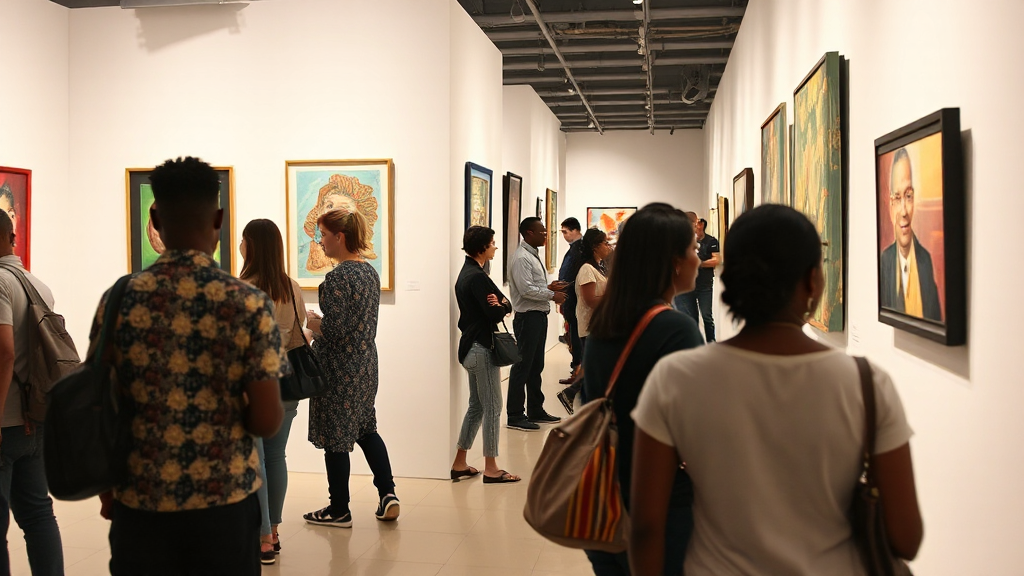
Nairobi Gallery Week returned for its fourth edition last week, transforming the city’s Westlands, Kilimani, and CBD gallery corridor into a ten-day showcase of contemporary visual art that drew collectors, curators, and critics from across Africa, Europe, North America, and the Gulf — and which, by most accounts, marked a coming-of-age moment for East Africa’s visual arts ecosystem.

The 2026 edition featured 60 artists from Kenya, Uganda, Tanzania, Rwanda, South Sudan, and Ethiopia, exhibiting across 18 venues ranging from the flagship Circle Art Agency on Peponi Road to converted warehouses in Industrial Area and pop-up installations at the Nairobi National Museum. Attendance over the ten days exceeded 28,000 visitors, with international visitors accounting for approximately 35 per cent of the total — a significant increase from the 22 per cent recorded in 2024.

Art That Speaks to the Moment

This year’s theme, Tunaunda Nchi Mpya — Swahili for “We Are Building a New Country” — was chosen before the programme was finalised, but proved uncannily resonant given Kenya’s continuing political ferment in the wake of the 2024 protest movement. Several of the most discussed works engaged directly with that moment, including a monumental textile installation by Nairobi-based Zawadi Aoko that wove together printed M-Pesa transaction receipts — accumulated from the families of protest victims — into a ten-metre hanging that dominated the entrance hall of the Kenya National Theatre annex.

Ugandan painter Ronah Mutebi exhibited a series of large-format oils depicting the bodies of East African lakes shrinking under climate pressure — landscapes that were simultaneously documentary and elegiac. Ethiopian photographer Mekdes Hailu’s series on women small-scale traders in Addis Ababa and Nairobi drew a particular crowd, with two prints selling to European institutional collectors at prices above USD 8,000 on opening night.

Kenyan sculptor Rahab Njoki, whose work in reclaimed urban waste has been quietly developing for a decade, experienced what the arts community tends to call a breakout week: her three pieces at the Paa ya Paa Gallery sold within 24 hours and generated approaches from galleries in Berlin and Dubai. “I have been making work for twelve years,” Njoki told ZaKenya.com. “This week has changed what is possible for the next twelve.”

The Market Dimension

For all its cultural seriousness, Gallery Week is also explicitly a commercial event, and the 2026 edition generated sales that organisers say significantly exceeded previous records. Circle Art Agency Director Kuona Trust confirmed that collective sales across member galleries exceeded Ksh 85 million over the ten days — a figure that includes both primary sales of new work and secondary market transactions brokered through the event’s dedicated collector programme.

The growing presence of Gulf collectors — particularly from the UAE and Saudi Arabia, where newly established art institutions are actively building collections of contemporary African work — was a notable feature of this year’s edition. Representatives from the Louvre Abu Dhabi and the newly established Riyadh Contemporary Museum attended as registered collectors, and at least one major institutional purchase by a Gulf museum was confirmed on the event’s final day, though the gallery declined to disclose the specific work or price.

Infrastructure, Policy, and the Road Ahead

The success of Gallery Week has reignited debate about the need for dedicated arts infrastructure in Nairobi. Kenya currently has no public contemporary art museum of international standing — a gap that advocates argue places the city at a disadvantage relative to Lagos, with its burgeoning private museum scene, and Kigali, which has made arts infrastructure a deliberate pillar of its urban development strategy.

Nairobi County Governor Johnson Sakaja attended the opening night and committed to engaging with the arts sector on a proposed Cultural Precinct concept that would cluster galleries, artist studios, and performance venues in a designated zone within the CBD. The proposal has been before county government for three years and has yet to move beyond a feasibility study. Gallery Week organisers expressed cautious optimism while making clear they have heard similar commitments before.

“Nairobi is already the de facto art capital of East Africa,” said Circle Art Agency founder Marko Magni. “The question is whether the infrastructure will catch up with the reality before the opportunity moves elsewhere.”

Read More
Kenyan Novelist Wanjiku Kamau Wins Commonwealth Literature Prize 2026
Arts & Entertainment

Kenyan Novelist Wanjiku Kamau Wins Commonwealth Literature Prize 2026

Wanjiku Kamau, a 34-year-old Nairobi-born novelist and former secondary school teacher, has been awarded the Commonwealth Literature Prize 2026 for her debut novel The Weight of Waiting — a multi-generational saga set across Nairobi’s Eastlands, rural Murang’a, and the Kenyan diaspora in Manchester that the prize judges described as “a masterwork of contemporary African fiction, written with the precision of a poet and the moral seriousness of a great humanist.”

The announcement was made in London during a ceremony attended by literary figures from across the 56 Commonwealth member states. Kamau, who was in Nairobi at the time, received the news at her home in Ruiru before joining the ceremony virtually to deliver a brief but widely shared acceptance speech in which she spoke in both English and Kikuyu. The prize carries a cash award of £25,000 and is widely regarded as among the most prestigious in English-language literature outside the Man Booker Prize.

The Novel and Its Themes

The Weight of Waiting, published by Nairobi-based Kwani? Press in partnership with Penguin Random House Africa in September 2025, follows three generations of the Waweru family from the Emergency period of the 1950s through to the aftermath of Kenya’s 2024 youth-led protests. Critics have particularly praised Kamau’s structural ambition — the novel moves between timelines and continents with remarkable control — and her unflinching examination of how political violence, migration, and economic precarity reshape family bonds across generations.

The novel’s closing section, set during the 2024 Finance Bill protests, has drawn particular attention for its portrayal of a young woman who must decide between leaving for the UK on a visa her family has spent years saving for, or remaining in Nairobi to join the movement that feels, for the first time, like it might change something. The passage has been widely shared on Kenyan social media and is taught in at least two Nairobi universities.

“I wrote this book because I kept seeing the same story told about Kenya from outside — the corruption, the poverty, the violence — without the interior life, without the love and the wit and the extraordinary ordinary endurance,” Kamau said in her acceptance speech. “I wanted to write the Kenya I grew up in. I hope readers everywhere find something in it that belongs to them too.”

A Rising Literary Voice

Kamau studied literature at the University of Nairobi before completing a master’s degree at the University of Edinburgh on a Commonwealth scholarship. She returned to Nairobi in 2017 and spent six years teaching English and Literature at a public secondary school in Mathare — an experience she has described in interviews as fundamental to her understanding of language and storytelling. She began writing The Weight of Waiting on weekends and during school holidays, completing the first draft in 2022.

Her win continues a rich tradition of Kenyan literary achievement on the international stage that stretches from Ngugi wa Thiong’o through Grace Ogot and, more recently, Yvonne Adhiambo Owuor, whose novel Dust brought Kenya sustained global critical attention a decade ago. Kenya’s literary community has rallied with characteristic warmth around Kamau’s win: Kwani? Trust Director Billy Kahora called it “the most exciting moment for Kenyan literature in a decade.”

Impact and Recognition at Home

The Kenyan government moved quickly to associate itself with the achievement. President Ruto’s office released a congratulatory statement within hours of the announcement, and Cabinet Secretary for Arts, Culture and Heritage Stella Ndung’u confirmed that Kamau would be awarded the Presidential Order of Cultural Achievement — a distinction that, somewhat embarrassingly for the government, had not been conferred on any artist since 2021.

Publishers are reporting a sharp surge in demand for The Weight of Waiting across East Africa following the announcement. The Nairobi-based Books First chain confirmed that all 14 of its branches had sold out within 24 hours of the prize being announced, and Kwani? Press has ordered a second print run of 50,000 copies — the largest in the publisher’s 20-year history. International rights, previously sold to publishers in France and Germany, are now under negotiation in 11 further territories.

Read More
Nairobi Jazz Festival 2026 Draws 80,000 Attendees Over Three Days
Arts & Entertainment

Nairobi Jazz Festival 2026 Draws 80,000 Attendees Over Three Days

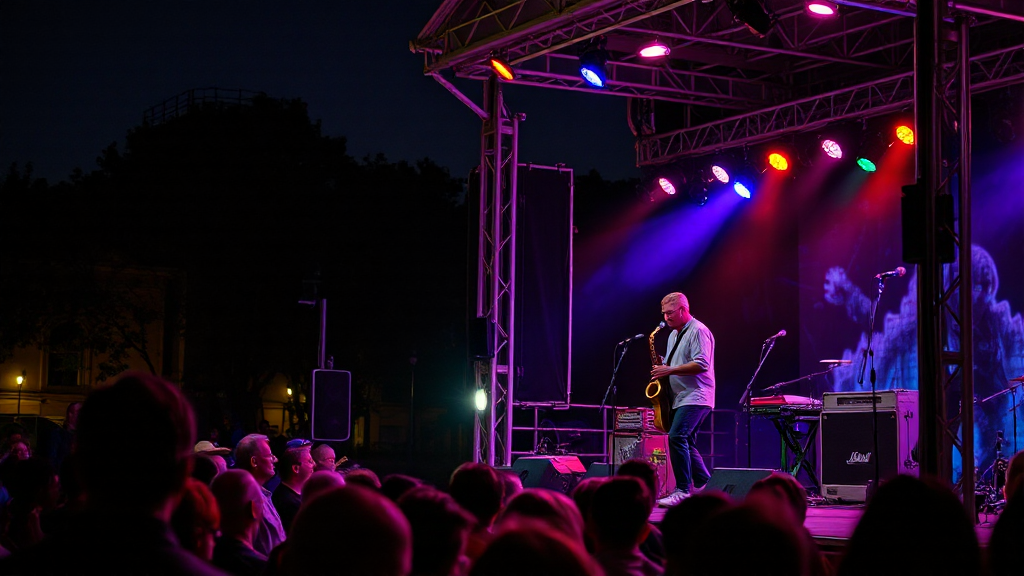
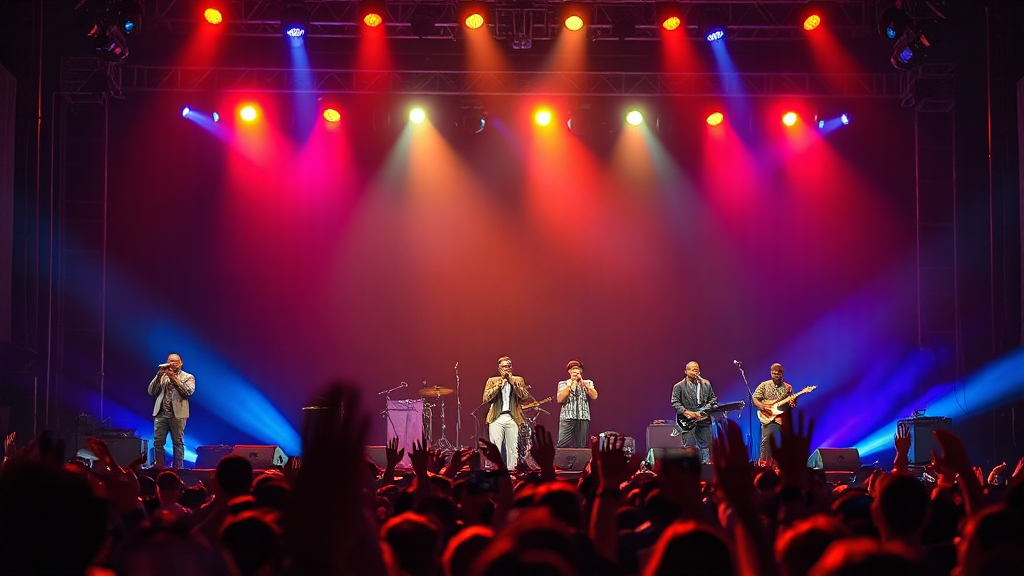
The Nairobi Jazz Festival concluded its 2026 edition at Uhuru Gardens last weekend having drawn a record 80,000 attendees across three days of performances that ranged from contemporary American jazz to Congolese rumba, Ethiopian azmari fusion, and homegrown Kenyan benga-jazz crossover — cementing the event’s status as the premier live music festival in East and Central Africa.

The attendance figure, confirmed by festival organisers Herbal Music Kenya on Monday, represents a 23 per cent increase over the 65,000 who attended the 2024 edition — the previous record — and comfortably exceeds the 75,000 target that the festival’s backers had set at the start of the year. The event sold out its Ksh 3,500 three-day passes within 48 hours of going on sale in March, with single-day tickets for the Saturday headliner programme selling out within six hours.

The Performances: World Class Meets Nairobi’s Own

This year’s headlining international acts included US saxophonist Kamasi Washington, whose extended set on Friday evening has already generated extensive social media discussion for its intensity and the rapport he built with what he described from the stage as “the most alive festival audience I have ever played for.” South African pianist Nduduzo Makhathini anchored the Saturday afternoon programme, followed by Mali’s Fatoumata Diawara in a performance that drew the largest single-set crowd of the weekend. Cuban ensemble Chucho Valdés & Afro-Cuban Messengers closed Saturday with a two-hour set that had the front third of the audience dancing continuously for the final 45 minutes.

But for many attendees, the most memorable performances of the weekend were homegrown. The Nairobi Horns Project, who opened the festival on Friday morning to an audience of perhaps 3,000 early arrivals, had grown to a crowd of over 12,000 by the end of their 70-minute set — a word-of-mouth surge that veterans of Nairobi’s live music scene described as unprecedented. Afro-jazz vocalist Asha Bhosle Ochieng, performing under her stage name Simply Asha, debuted new material from her forthcoming album Mtoni wa Moyoni to a rapturous response.

Economic Impact and Cultural Significance

The festival’s economic footprint extended well beyond ticket sales. Nairobi County’s Culture and Events Office estimated that the three-day event generated approximately Ksh 2.8 billion in direct economic activity, accounting for hotel bookings, restaurant spending, transport, and retail sales in the Langata and Kibera neighbourhoods surrounding Uhuru Gardens. Visitors from Uganda, Tanzania, Rwanda, and Ethiopia accounted for a notable share of premium ticket buyers, highlighting the festival’s growing role as a driver of cultural tourism in the EAC region.

For Kenya’s creative economy advocates, the figures carry significance beyond the commercial: they represent a counter-narrative to the austerity discourse that has dominated public conversation since Kenya’s IMF programme was confirmed in 2024. “When 80,000 people spend their weekends at Uhuru Gardens listening to jazz, that is an economic sector the government should be nurturing with the same seriousness it applies to tea and tourism,” said festival co-founder Muthoni Drummer Queen, whose vision for Nairobi as a serious live music capital has been the driving force behind the event since its inaugural edition in 2012.

Organisation and Infrastructure

The 2026 edition also saw improvements in logistics that addressed complaints from previous years. The introduction of a cashless payment system — run exclusively through M-Pesa’s tap-to-pay infrastructure — significantly reduced queuing at food and merchandise vendors. A dedicated shuttle service from Nairobi CBD, Westlands, and Eastlands reduced private vehicle congestion, with an estimated 18,000 festival-goers using the shuttle option. Medical teams from the Kenya Red Cross and the newly operational SHA (Social Health Authority) rapid-response unit were stationed across the venue, and festival organisers reported zero medical emergencies requiring hospitalisation over the three-day run.

Planning for the 2027 edition is already under way, with festival organisers and the Nairobi County government in discussions about whether to expand to a four-day format and add a second stage to accommodate demand that this year’s venue configuration could not meet. An application has also been submitted to UNESCO’s Creative Cities of Music network, which organisers hope will further elevate Nairobi’s international profile as a music destination.

Read More
Kenya's Film Industry Booms as Netflix Commissions Six New Kenyan Productions
Arts & Entertainment

Kenya’s Film Industry Booms as Netflix Commissions Six New Kenyan Productions

Netflix has commissioned six new Kenyan productions in the first half of 2026 — its largest single-country content investment in East Africa to date — in a move that industry insiders say marks a decisive turning point for a local film and television sector that has been gathering momentum for several years but has historically struggled to attract international capital at scale.

The six commissions span two feature films, two limited drama series, and two documentary projects, with a combined production budget estimated by industry sources at over USD 18 million — a figure that dwarfs previous international streaming investment in Kenyan content and is expected to generate employment for hundreds of writers, directors, cinematographers, actors, set designers, and technical crew across a 24-month production cycle.

The Commissions and Their Creators

Netflix confirmed three of the projects publicly at a Nairobi press briefing attended by ZaKenya.com. The most anticipated is Mathare, a six-part drama series written and directed by filmmaker Likarion Wainaina — whose debut feature Supa Modo was Kenya’s first submission to the Academy Awards — set against the backdrop of a Nairobi informal settlement navigating the aftermath of political unrest. A feature film tentatively titled The Lake Crossers, examining migration and identity through the lens of the East African Rift Valley’s communities, is being co-produced with a South African studio. The third confirmed project is a feature documentary on Kenya’s preparation for the 2028 Los Angeles Olympics, following three athletes — a marathon runner, a 400m hurdler, and a wrestler — over the next two years.

Netflix’s Vice President for Sub-Saharan Africa, Adaeze Nwosu, said Kenya’s growing storytelling infrastructure had made it a natural focus for expanded investment. “Kenyan writers rooms, Kenyan directors, Kenyan cinematographers — there is a depth of talent here that was always present but is now visible to global audiences because the distribution platform has arrived,” Nwosu told reporters. “These six commissions are the beginning of a much longer partnership.”

The Ecosystem Behind the Boom

The Netflix commissions reflect — and will further accelerate — an ecosystem that has been quietly maturing over the past decade. The Kenya Film Commission (KFC) reports that registered film production companies grew from 312 in 2020 to 847 in 2025. Three new professional-grade studios have opened in Nairobi since 2023, including the KFC’s own Eastlands Production Hub, built with government funding and equipped with post-production facilities that previously required Kenyan filmmakers to travel to South Africa or Egypt.

The growth of digital platforms — Showmax, Netflix, Prime Video, and local streaming service Buni Media — has created an insatiable appetite for African-language content. Kenya’s multilingual landscape, with productions possible in Swahili, Kikuyu, Luo, Luhya, and English, gives it a uniquely broad market reach across East and Central Africa.

The Kenya Revenue Authority has also been drawn into the picture: KRA’s film desk, established in 2024, provides tax incentive certificates to international productions shooting in Kenya that employ at least 60 per cent Kenyan crew — a structure credited with attracting five major international productions in 2025 alone, including a BBC nature documentary series filmed in the Maasai Mara.

Young Talent and the Gen Z Creative Wave

Industry observers note that Kenya’s Gen Z generation — politically awakened by the 2024 Finance Bill protests — has channelled significant creative energy into film, animation, and digital content. Several of the writers attached to the new Netflix commissions are under 30, many of them self-taught through YouTube tutorials and online courses before gaining professional credits through short film circuits.

“The protest generation did not just go to parliament,” said film producer Judy Kibinge, one of Kenya’s most respected industry veterans. “They also went into edit suites and writers’ rooms. The urgency and the anger and the hope you see in the best new Kenyan scripts right now — it comes from that same place.”

With Nollywood’s dominance of African screen culture increasingly challenged by output from Kenya, South Africa, and Ethiopia, the industry’s centre of gravity on the continent appears to be shifting. Kenya’s six Netflix commissions are the clearest signal yet that the country is staking a serious claim to be a leading voice in that reshaping.

Read More
Sauti Sol Announces World Tour Including First US Stadium Show
Arts & Entertainment

Sauti Sol Announces World Tour Including First US Stadium Show

Sauti Sol, the four-piece Nairobi band widely credited with carrying Kenyan music to global audiences, have announced their most ambitious touring programme to date: a 28-date world tour spanning North America, Europe, Australia, and the Gulf, headlined by what will be their first-ever US stadium performance at the 70,000-capacity SoFi Stadium in Los Angeles this October.

The tour, titled Tuko Hapa — Swahili for “We Are Here” — was announced simultaneously across the group’s social media platforms and confirmed by their management at Nyota Entertainment in a statement that described the Los Angeles date as “a moment ten years in the making.” Tickets go on sale on 15 July through a partnership with Live Nation, with pre-sale access offered via M-Pesa’s Tickets app — a Safaricom partnership that the group said reflects their commitment to keeping Kenyan fans connected to their journey.

A Historic Milestone

The SoFi Stadium date carries particular resonance given that Los Angeles will host the 2028 Summer Olympic Games, a competition in which Kenya holds deep emotional investment as one of the world’s great track and field nations. Sauti Sol’s management confirmed that the show has been styled in part as a cultural bridge ahead of 2028 — a celebration of Kenyan creative excellence to complement the country’s anticipated athletic success.

“SoFi Stadium is where the Super Bowl is played. It is where Beyoncé has performed,” said group member Bien-Aimé Baraza in a video message shared with ZaKenya.com. “When we step onto that stage in October, we are not just representing Sauti Sol. We are carrying Nairobi, we are carrying Kenya, we are carrying every young musician in Kibera or Kisumu who has ever been told that African music has a ceiling.”

The Kenyan diaspora community in the United States — estimated at over 100,000, with significant concentrations in the Dallas-Fort Worth, Washington DC, and greater Los Angeles metro areas — is expected to drive strong early ticket sales. The group’s Los Angeles fan club, Sauti Sol LA, has already begun coordinating coach transport from as far away as San Diego and San Francisco.

The Tour Itinerary

The Tuko Hapa tour opens in Nairobi on 5 September with a homecoming concert at KICC Grounds — a rare outdoor ticketed show at the venue, which is being temporarily reconfigured to hold an estimated 25,000 fans. The band will then move through London (The O2 Arena, 18 September), Amsterdam, Paris, Toronto, New York (Madison Square Garden, 3 October), and Los Angeles before closing with dates in Dubai and Melbourne in December.

The European leg has been coordinated with the Kenya Tourism Board as part of a cultural diplomacy push, with the band set to participate in roundtable discussions on the African creative economy in London and Amsterdam alongside Kenyan embassy officials. It is a reminder that for governments navigating austerity and international reputation management, their artists often punch above the weight of any formal diplomatic delegation.

New Music and Creative Direction

The tour will coincide with the release of a new album — as yet untitled — scheduled for a September launch on all major streaming platforms. The group described the record as their “most sonically expansive work,” drawing on Afrobeats, traditional benga rhythms, and contemporary R&B influences. Producers involved include Bongo Beats stalwart S2kizzy and US-based Kenyan producer OG Swish, who has previously worked with artists on the Atlantic Records roster.

Sauti Sol’s commercial and cultural trajectory has made them a reference point for Kenya’s creative economy advocates who argue that investment in music infrastructure — studios, live venue development, intellectual property frameworks — would enable more Kenyan artists to replicate their success. Music industry analyst Njoroge Kariuki estimated that the Tuko Hapa tour would generate approximately Ksh 4.5 billion in direct and indirect economic activity, a figure that will strengthen the case for greater government and private sector support for Kenya’s live music ecosystem.

Read More