NSE Adds KSh 817 Billion in Wealth as Market Hits All-Time High in H1
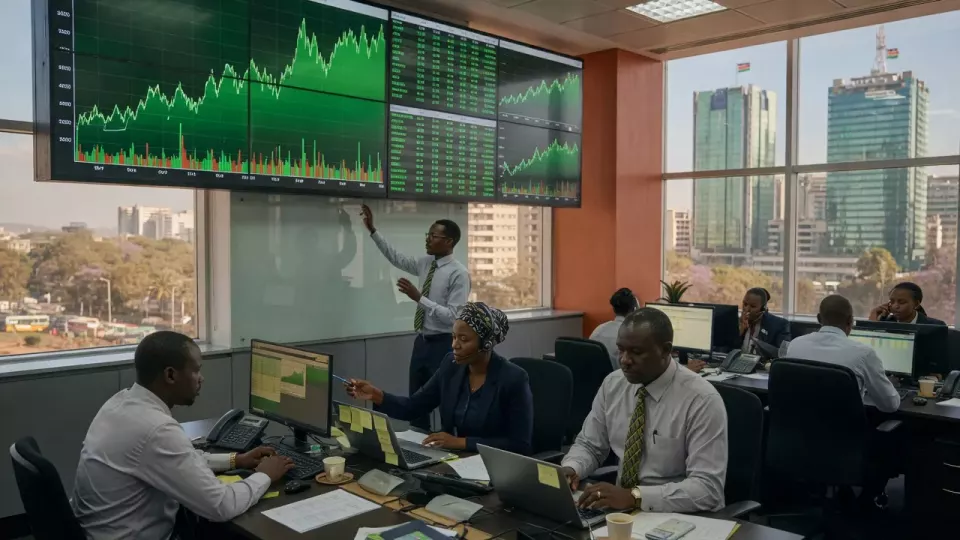
The Nairobi Securities Exchange (NSE) closed the first half of 2026 in remarkable fashion, adding KSh 817.2 billion in investor wealth between January and June — one of the most productive six-month stretches in the bourse's history. Total market capitalisation climbed to a fresh all-time record of KSh 3.812 trillion by the opening week of July, cementing the NSE's status as one of East Africa's most dynamic capital markets and renewing confidence among institutional and retail investors alike.
A Half-Year of Across-the-Board Gains
The bull run was broad-based and persistent. The NSE All-Share Index (NASI) gained 20.14% over the six-month period, while the NSE 25 — which tracks the top 25 companies by market capitalisation and liquidity — rose 21.82%. The NSE 10 Index, concentrated among the country's blue-chip counters, recorded a 22.61% gain, demonstrating that investor appetite for quality was particularly strong. The NSE 20, one of the exchange's oldest and most closely watched indices, climbed to 3,710 points on June 25, 2026, its highest level in several years.
June was the standout month of the half, with equities posting their strongest single-month performance of the year and pushing several counters to multi-year highs. Market analysts attribute the momentum to a combination of strong corporate earnings, an improving macroeconomic environment, easing inflation and renewed confidence in Kenya's long-term growth trajectory following a string of positive policy signals from the government.
Banking Sector Leads the Charge
The NSE's Banking Sector Index was the star performer of H1 2026, surging 25.27% over the period — outpacing every other sector index on the exchange. This banking-led rally was underpinned by a succession of strong first-quarter 2026 earnings releases from Kenya's major lenders, including Equity Group Holdings, KCB Group and NCBA Group. Analysts noted that improved net interest margins, recovering loan demand and disciplined cost management all contributed to earnings beats that consistently surprised on the upside.
Safaricom, Kenya's most valuable listed company by market capitalisation, also contributed materially to overall index gains following the announcement of its record FY2026 results, which included a KSh 95.6 billion attributable profit and the largest corporate dividend in Kenyan history at KSh 80.1 billion. The stock's performance over the half reflected investor enthusiasm for Safaricom's growth trajectory, particularly within its M-Pesa financial services business.
Retail Investors Enter the Market Through M-Pesa
One of the most significant structural shifts underlying the H1 2026 rally has been the meaningful growth in retail investor participation. The 2025 launch of Ziidi Trader — a mobile trading platform integrated directly into Safaricom's M-Pesa ecosystem — dramatically lowered the barrier to entry for ordinary Kenyans who had previously found the brokerage process too complex or costly. Daily retail participation has increased considerably since the platform went live, improving liquidity especially among mid-cap counters that had previously suffered from thin trading volumes and wide bid-ask spreads.
Industry observers note that democratising stock market access through mobile money is a potential game-changer for Kenya's capital markets. Kenya has over 30 million active M-Pesa users, and even a small fraction directing a portion of their savings into equities can have a material impact on market depth and price discovery. The Ziidi Trader model is being closely watched by other African exchanges considering similar fintech integrations.
Records Broken and a Cautiously Optimistic Outlook
Crossing the KSh 3.812 trillion market capitalisation threshold is a landmark for the NSE, which spent much of the period between 2021 and 2024 recovering from headwinds including COVID-19 aftershocks, tax policy uncertainty and currency depreciation that weighed heavily on valuations. The H1 2026 performance suggests those headwinds have substantially dissipated, replaced by a more constructive environment of easing inflation, stronger corporate earnings and improved fiscal discipline.
Looking to H2 2026, analysts remain cautiously optimistic. Sustained performance will depend on whether corporate earnings momentum continues, whether global risk appetite remains supportive of frontier-market equities, and whether Kenya's macroeconomic fundamentals — including currency stability and fiscal consolidation — hold firm. For now, the record books have been rewritten, and Nairobi's stock exchange stands as a compelling beacon of regional economic confidence.