Nairobi's Silicon Savannah Hosts Africa's Biggest Tech Startup Conference 2026
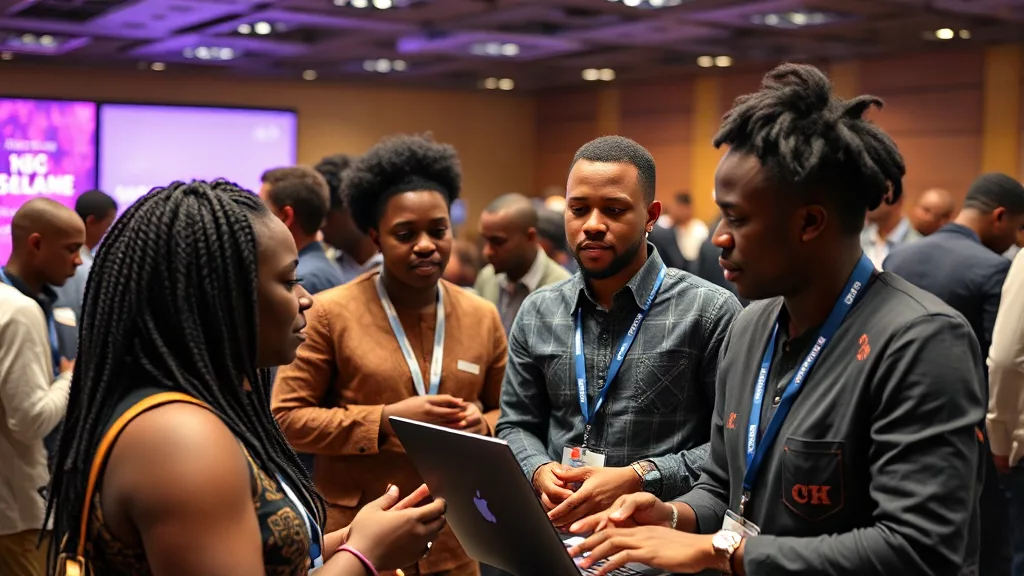
Nairobi burnished its credentials as Africa's premier technology capital in June 2026, hosting the fourth edition of the African Innovation Summit (AIS) — the continent's largest gathering of tech founders, investors, policymakers, and ecosystem builders. Over four days at the Sarit Expo Centre and across satellite venues including the reimagined iHub campus in Westlands, the conference drew 12,000 registered delegates from all 54 African Union member states and attracted international participation from Silicon Valley, London, Singapore, and Shenzhen at levels that would have seemed aspirational even three years ago.
The headline number that will circulate beyond the conference halls: USD 412 million in investment commitments announced during AIS 2026, spanning deals across fintech, agritech, healthtech, and logistics technology. Kenyan startups captured the largest share — approximately USD 180 million — a dominance that reflects both the maturity of the local ecosystem and the structural advantages that Nairobi offers as a headquarters location for pan-African tech businesses.
The Conference Programme and Keynote Moments
The opening keynote by President Ruto set an unmistakably political tone for an otherwise techno-optimistic gathering. Speaking to a packed main auditorium, Ruto invoked Kenya's 2028 Los Angeles Olympics preparation as a metaphor for national ambition — the discipline of long-term investment paying off in a single high-visibility moment — and committed an additional Ksh 5 billion in government venture capital to the Kenya Innovation Fund, which will be administered through a new partnership with the Nairobi-headquartered African Development Bank satellite office.
The most discussed session was a panel on the legacy of the 2024 Gen Z protests, moderated by tech journalist Techweez founder Mbugua Njihia, that placed the political awakening of Kenya's youth squarely within the context of digital organising. Panellists argued that the protests — coordinated largely through TikTok, X, and WhatsApp in a manner that wrong-footed an establishment still thinking in broadcast media terms — demonstrated the genuine civic power of Africa's connected youth, and that startups building civic technology, transparent government procurement platforms, and financial literacy tools for young Kenyans were operating at the intersection of commerce and social change. The session attracted spontaneous applause from an audience where the majority of delegates appeared to be under 35.
Deals, Unicorns, and the Funding Landscape
Among the significant announcements at AIS 2026: Nairobi-based logistics platform Sendy confirmed a Series C raise of USD 62 million led by the IFC and a consortium of European development finance institutions, earmarked for expansion into francophone West Africa. Healthtech startup Ilara Health, which places AI-powered diagnostic equipment in rural clinics across Kenya, Uganda, and Tanzania, closed a USD 28 million Series B with investors including Novastar Ventures and MSD Global Health Innovation Fund — its technology now directly relevant to SHA implementation as the government digitises primary healthcare access records. Agritech firm Apollo Agriculture, already profitable on Kenyan operations, announced a USD 45 million raise to expand its machine-learning crop advisory and input credit service into Zambia and Mozambique.
The aggregate deal flow attracted attention in global VC circles. "Nairobi is no longer a market that investors visit once a year on an Africa tour," said Kanini Mutooni, Managing Director of Toniic and a prominent voice on the global impact investing circuit. "It is a market where sophisticated funds are building permanent local teams because the deal volume justifies it."
The 5G rollout, increasingly cited by founders and investors alike, has emerged as an unexpected catalyst for startup product development. Several demos at AIS featured applications — real-time quality-grading cameras for produce at farm gates, remote ultrasound consultation platforms, drone logistics management systems — that were technically feasible on 4G but commercially viable only on the higher bandwidth and lower latency that 5G provides in urban Kenya.
Challenges the Conference Did Not Gloss Over
The conference format was unusual in its deliberate inclusion of sessions on failure and friction, rather than the relentlessly triumphalist programming that characterises some tech gatherings. A half-day track on regulatory challenges heard frank testimony from founders about the difficulty of navigating CBK licensing for fintech products, competition law uncertainty created by dominant platform players, and the persistent challenge of data localisation requirements that add compliance costs for startups building cross-border products.
There was also an honest reckoning with talent retention. Kenya produces exceptional engineering graduates from institutions including University of Nairobi, Strathmore, JKUAT, and Moringa School, but loses a significant proportion to international tech companies offering salaries denominated in dollars or pounds — a brain drain that AIS delegates addressed through a public commitment from twelve large Nairobi-based tech employers to publish transparent salary bands competitive with comparable international roles, adjusted for purchasing power parity.
As delegates departed Nairobi for their home cities — Accra, Lagos, Kigali, Cairo, Johannesburg — there was a palpable sense that Silicon Savannah's claim to continental pre-eminence had graduated from aspiration to established fact. Whether that status can be maintained as other African cities accelerate their own ecosystem investments will define the continent's next chapter of tech growth. For now, the Kenyan capital is writing the story, on its own terms.