Kenya's Flower Export Industry Rebounds as European Demand Surges Post-Season
Kenya's cut-flower industry is back in full bloom. After two difficult years shaped by El Nino rainfall disruptions around Lake Naivasha, inflationary freight costs, and a temporary dip in European consumer spending, the sector has posted its strongest mid-year performance since 2022, with export earnings for the first five months of 2026 reaching Ksh 65.4 billion — up 19 per cent on the same period last year, according to the Horticultural Crops Directorate (HCD).
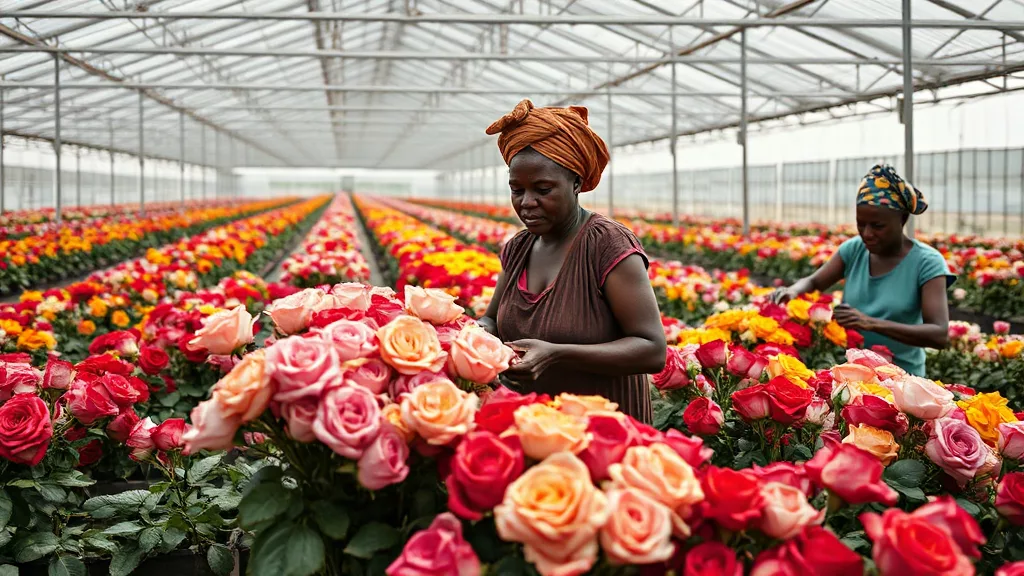
The rebound has been felt most keenly at the Kenya Flower Council (KFC), which represents over 120 commercial growers employing an estimated 150,000 workers, the majority of them women, in the Lake Naivasha basin and Rift Valley highlands. "This recovery is not accidental," said KFC Chief Executive Clement Tulezi. "Growers invested through the difficult years in varietal innovation and water-use efficiency. Now the market is rewarding that discipline."
European Demand and the Dutch Auction Premium
The primary driver of the surge is a robust return of European consumer demand, particularly in the Netherlands, Germany, and the United Kingdom. Royal FloraHolland, the world's largest flower auction, reported that Kenyan roses commanded an average auction price of EUR 0.42 per stem in May 2026 — a 12 per cent premium over the 2024 average — as Dutch growers faced elevated energy costs that have made their greenhouse production less competitive against East African outdoor-grown flowers.
Kenyan growers have capitalised on this structural advantage with a ferocity that surprised even sector optimists. Kenya Airways Cargo, which operates six dedicated freighter services weekly between Nairobi's JKIA and Amsterdam Schiphol, reported that its cold-chain perishables capacity was 94 per cent utilised through April and May — the highest occupancy rate in the route's history. A new agreement signed in March between Kenya Airports Authority and Lufthansa Cargo adds two additional weekly freighter rotations from July, adding capacity for an estimated 800 additional tonnes of flowers per week.
Climate Adaptation Paying Off
The El Nino events of 2023-2024 inflicted severe flooding on farms around Lake Naivasha, destroying infrastructure and contaminating irrigation water. The aftermath forced a painful consolidation: several smaller growers exited the market, while medium and large operations invested in raised-bed cultivation systems, solar-powered borehole pumps, and more sophisticated post-harvest cooling facilities with World Bank climate-adaptation grant support.
The result is a sector that is paradoxically more resilient than before the disruption. Water consumption per stem has fallen by an estimated 18 per cent across KFC member farms since 2023, a development that matters both for sustainability credentials demanded by European retail chains and for managing the chronic water-stress of Lake Naivasha's ecosystem, which remains under scrutiny from environmental regulators.
The Kenya Climate Smart Agriculture Project, jointly funded by the government and the African Development Bank, has now reached 2,400 smallholder flower growers with technical assistance on climate-adaptive practices — an important democratisation of a sector that has historically been dominated by large corporate farms.
Value Addition and Domestic Opportunity
Industry leaders are pushing the government to create conditions for further value addition within Kenya. Currently, almost all exported flowers are sold as raw cut stems, with packaging, processing, and retail margins captured in Europe. The KFC has lobbied the Treasury for duty relief on packaging materials and refrigerated trucks to enable a modest shift towards finished bouquet exports — a category that commands roughly three times the per-unit revenue of raw stems.
A pilot programme with Nairobi Supermarkets Consortium has also expanded the domestic fresh-flower retail market, which KFC estimates has grown to Ksh 4.2 billion annually — still small relative to export earnings but culturally significant as middle-class Kenyan consumers increasingly incorporate fresh flowers into everyday purchases rather than reserving them for funerals and weddings.
With the European summer season traditionally the strongest quarter and bookings already running well ahead of last year, the full-year outlook is optimistic. The HCD projects 2026 flower export earnings could reach Ksh 155 billion — which would comfortably eclipse the previous all-time record of Ksh 133 billion set in 2021.