Kenya's Aviation Sector Grows 30% as New Airlines Enter Nairobi Market
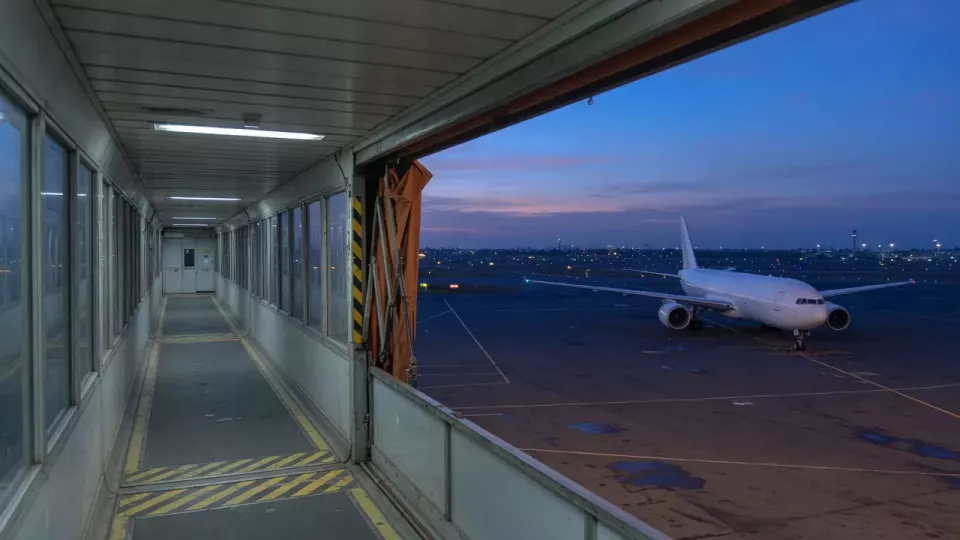
Jomo Kenyatta International Airport handled 5.8 million passengers in the first six months of 2026, a 30% increase on the same period in 2025 and the strongest half-year growth figure in the airport's history. The surge has been driven by the simultaneous entry of six new international carriers, a post-pandemic travel rebound that has proved more sustained than analysts initially projected, and Kenya's growing reputation as a gateway for business travel into the broader East and Central African region.
Kenya Airports Authority (KAA) director-general Henry Ogoye called the numbers "a resounding affirmation of Kenya's open skies policy" and said the authority was accelerating expansion works at JKIA's Terminal 1 to ensure that capacity constraints do not throttle further growth. A phased refurbishment, costing an estimated Ksh 14 billion and funded through KAA's own revenues supplemented by a French Development Agency loan, will add 12 new contact gates and expand the international arrivals hall before the end of 2027.
New Carriers Transform Route Map
The new entrants span three continents. IndiGo, India's largest budget carrier, launched four-times-weekly services between Mumbai and Nairobi in January 2026, tapping into booming trade and tourism flows between the two countries and providing welcome competition on a route previously monopolised by Kenya Airways and Air India. Within three months IndiGo had filled 83% of its Nairobi seats, prompting a frequency upgrade to daily services from April.
European budget giant Wizz Air entered the market in March with thrice-weekly Nairobi-Budapest flights offering a connection point into its vast intra-European network, while Royal Air Maroc expanded its Nairobi-Casablanca schedule from daily to double-daily, citing demand from West African businesspeople transiting through Morocco. On the African continent, Air Tanzania relaunched Dar es Salaam-Nairobi services after a two-year hiatus, and Ethiopian Airlines added a third daily frequency on the Addis-Nairobi trunk route.
Perhaps most significantly for cargo, logistics giant DHL Aviation launched a dedicated Nairobi-Leipzig freighter service three times a week, positioning JKIA as a regional belly-cargo consolidation point. KAA freight data shows air cargo volumes up 38% year-on-year in the first half, driven by perishable exports — flowers, green beans, avocados — alongside growing e-commerce fulfilment flows.
Kenya Airways Navigates a Changed Landscape
The competitive picture is bittersweet for Kenya Airways (KQ). The national carrier has welcomed the stimulus new entrants bring to route traffic but faces intensified yield pressure on its core routes. KQ chief executive Allan Kilavuka told an investor briefing in May that the airline had responded by accelerating its own network expansion, adding Lagos, Accra-Abidjan via a fifth freedom stop, and a new code-share arrangement with Japan Airlines to deepen connectivity to Tokyo.
KQ reported its second consecutive full-year operating profit in 2025, but the first quarter of 2026 saw yields compress by around 6% on the Nairobi-London route as Wizz Air and existing low-cost operators offered aggressive promotional fares. Kilavuka said the airline was focusing on premium and business traffic, where its Nairobi hub advantage was hardest to replicate. The carrier has also pinned hopes on an Airbus A330-900neo fleet renewal — with three aircraft due for delivery before year-end — to cut unit costs by approximately 8%.
Wilson Airport and Regional Aviation
Buoyant traffic at JKIA has been matched by strong growth at Wilson Airport, Nairobi's smaller general aviation hub, where charter and scheduled regional services to destinations including Mombasa, Malindi, the Maasai Mara, and South Sudan have seen a 21% passenger increase. KAA has fast-tracked a Wilson expansion study in response to concerns that the airport's single paved runway and cramped apron are approaching capacity limits.
With Kenya preparing to host several international sporting events in the run-up to the 2028 Los Angeles Olympics — athletes from across Africa will use Nairobi as a training base — KAA is under political pressure to ensure that air access keeps pace. CS for Transport Kipchumba Murkomen said in June that the government was also conducting a feasibility review of a potential new greenfield airport to the north of Nairobi, a project that has been discussed for years but never reached procurement stage.