CBK Holds Base Rate at 12.5% Amid Easing Inflation and Currency Stability
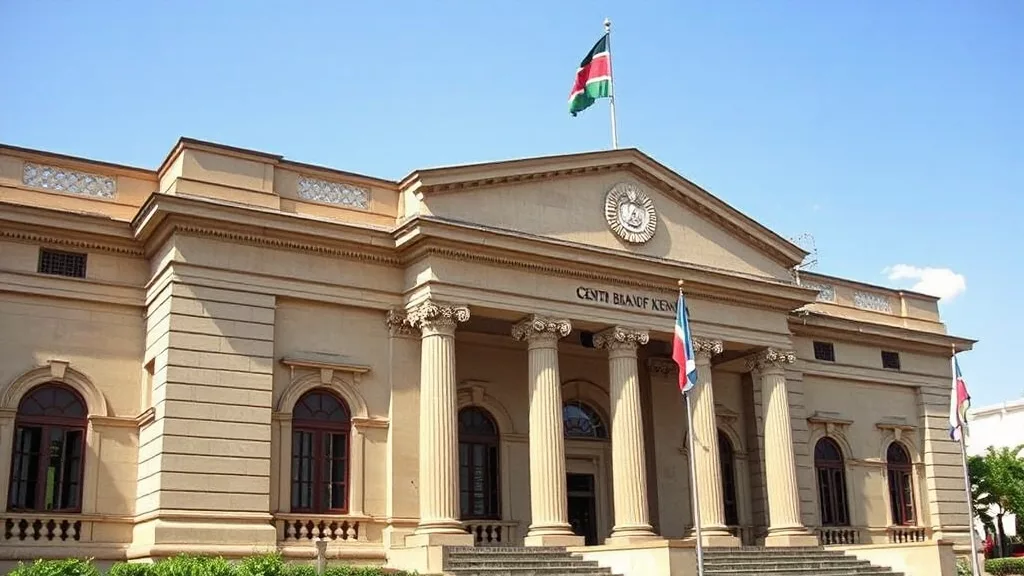
The Central Bank of Kenya's Monetary Policy Committee (MPC) voted unanimously to hold the Central Bank Rate at 12.5% at its June 2026 sitting, governor Dr Kamau Thugge announced on Wednesday evening. The decision, in line with the consensus expectation of all twelve analysts surveyed by ZaKenya.com ahead of the meeting, reflects the MPC's assessment that inflation is on a sustainable downward trajectory but that the pace of easing remains too fragile to justify a rate cut at this juncture.
Kenya's headline inflation fell to 4.7% in May 2026, comfortably within the government's 2.5% to 7.5% target band and the lowest reading since February 2022. Food inflation, which had been the dominant driver of price pressure following the El Nino-related harvest disruptions of late 2023 and early 2024, eased to 5.1% in May as improved long rains across the Rift Valley and Central Kenya replenished both farm production and strategic grain reserves. The National Cereals and Produce Board reported maize stocks at their highest level in four years.
Shilling Stability Provides Breathing Room
A critical underpinning of the MPC's patient stance has been the Kenyan shilling's relative stability. The currency has traded in a narrow band of Ksh 127 to Ksh 131 against the US dollar since January 2026, a far cry from the volatility of 2023, when the shilling touched an all-time low of Ksh 161. The recovery has been sustained by strong diaspora remittances — which hit a record $4.5 billion in 2025 — a rebound in tourism receipts, consistent IMF programme disbursements that have bolstered foreign exchange reserves, and improved current account discipline following the KRA's aggressive import duty enforcement campaign.
CBK official foreign exchange reserves stood at $9.3 billion as at end-May 2026, equivalent to 4.8 months of import cover, comfortably above the EAC-prescribed minimum of 4.5 months. Dr Thugge noted that the reserve buffer had allowed the CBK to intervene selectively in the forex market to smooth volatility without depleting the reserve position, a contrast with the reactive and depleting interventions of 2022 and 2023.
"The current account is in better shape than it has been in five years," the governor told reporters. "We are not complacent — global oil prices remain a significant upside risk — but the fundamentals support confidence in the shilling's trajectory." Brent crude had traded at around $79 per barrel in the week before the MPC meeting, a level that kept Kenya's fuel import bill manageable, though the government's automatic pump price adjustment mechanism means any spike would quickly pass through to consumers.
IMF Programme and Fiscal Discipline
The MPC's statement acknowledged the role of fiscal consolidation under Kenya's IMF Extended Fund Facility in creating the conditions for monetary easing. The government has met its primary fiscal balance targets for five consecutive quarters, a performance that has unlocked $630 million in IMF disbursements since the programme's commencement. However, the austerity required to achieve those targets — including public sector pay restraint, rationalisation of tax incentives, and cuts to development spending in non-priority sectors — has been politically costly and has contributed to the subdued consumer spending environment that is itself helping to contain inflation.
Treasury CS John Mbadi told Parliament's Finance Committee last week that the government remained on track to reduce the fiscal deficit from 4.8% of GDP in fiscal year 2025/26 to 3.9% in 2026/27, a trajectory that the IMF's Article IV consultation team described as "credible but leaving limited fiscal space for election-related spending pressures." With the 2027 general election fourteen months away, those pressures are already visible in supplementary budget proposals that have added Ksh 47 billion in spending on roads, school feeding programmes, and constituency development fund disbursements.
When Will Rates Come Down?
Financial markets have been pricing in a first rate cut of 50 basis points at the August 2026 MPC meeting, based on inflation expectations and the CBK's own forward guidance language, which shifted perceptibly from "hawkish" to "cautiously neutral" at the April meeting. The June statement maintained that language, describing the balance of risks as "broadly even" — MPC-speak that analysts interpret as conditional on two more months of benign inflation prints before a cut is sanctioned.
For commercial borrowers, the practical impact of any CBK cut will depend on how quickly banks pass it through. Kenya Bankers Association chairperson John Gachora acknowledged that the spread between the CBK rate and average commercial lending rates — currently around 5 percentage points — remained "wider than we would like" and attributed part of the gap to elevated credit risk perceptions in the current economic environment. He said member banks were committed to passing through rate reductions promptly but cautioned that non-performing loan ratios, currently at 15.3% of the gross loan book, would need to moderate before banks could fully relax credit pricing.
For Kenya's millions of small business owners and aspiring mortgage borrowers, the wait for meaningful rate relief continues. The MPC's next scheduled sitting is in August, and its decisions will be watched not just by financial markets but by a politically restless population that is measuring the Ruto administration's economic management credentials ahead of what promises to be a fiercely contested 2027 election.